


Colombia Returns Remains of Guerrilla Priest Camilo Torres
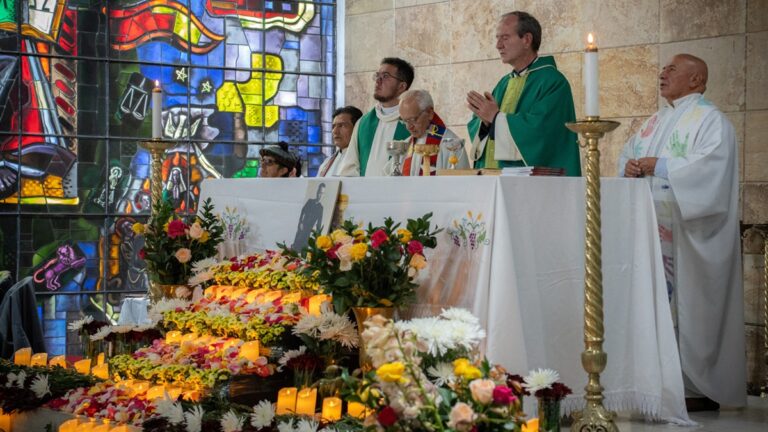
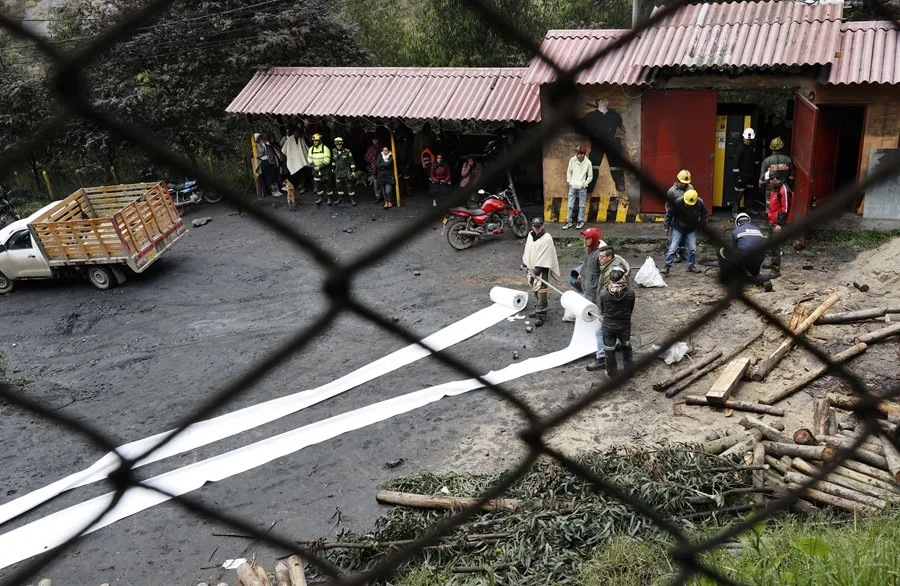
Memorial Mass for Camilo Torres, Feb. 15, 2025. Photo: Unimedios
February 16, 2026 Hour: 8:07 am
🔗 Comparte este artículo
The Liberation Theology precursor remains a powerful figure in the nation’s collective memory.
On Sunday, Colombia’s Missing Persons Search Unit (UBPD) handed over the remains of priest Camilo Torres, on the same day marking the 60th anniversary of his death.
RELATED:
Jesuit priest Javier Giraldo, who in 2019 submitted the request that set the search in motion, received the remains hours after taking part in a Eucharist in honor of Torres held at the Cristo Maestro Chapel at the Colombian National University in Bogota.
For the UBPD to hand over Torres’ skeletal remains, a ruling from the National Institute of Legal Medicine was not required because three other technical confirmations already exist.
The case of Camilo Torres is one of the first forced disappearances in Colombia, a country where about 120,000 people have been disappeared during the past 50 years of internal conflict.
Camilo, the Guerrilla Priest
Sixty years after the death of priest Camilo Torres Restrepo, the historical figure of the “guerrilla priest” remains alive in Colombia’s collective imagination.
Torres — a sociologist, a precursor of Liberation Theology in Latin America and a symbol of the National Liberation Army (ELN)— died in combat on Feb. 15, 1966, at age 37, in Patio Cemento, a rural area of San Vicente de Chucuri, in the department of Santander.
“The figure of Camilo continues to have transcendental relevance in the development of ideas that can drive processes of transformation in the country, in the construction of unity among all social, political, cultural and environmental sectors,” said historian Carlos Medina, author of the book “Camilo Torres Restrepo: The United Front and Effective Love, Messages for the 21st Century.”
Camilo Torres was born Feb. 3, 1929, into a well-off Bogota family and was related to former President Juan Manuel Santos (2010-2018), who has recounted that as a child he helped Torres at some Masses as an altar server.
After his priestly ordination, Torres earned a degree in social sciences from the Catholic University of Leuven in Belgium, where he showed sensitivity to the problems of the poorest — an option that years later would find resonance in the Liberation Theology.
“The concept of ‘effective love’ is one of the most important in building the social and political commitment of Christians, a love that is basically expressed in social and political struggle, in commitment to change, and that is a fundamental part of the Camilist imagination,” Medina said.
From Cassock to Rifle
That worldview led Camilo Torres to exchange his cassock for a rifle in late 1965, when he joined the ranks of the ELN, then a Marxist-Leninist guerrilla group that remains active in Colombia.
After the guerrilla priest was killed in combat, the trail of his body was lost. His burial site was concealed by the Army to prevent him from becoming a revolutionary symbol, enlarging the myth of the priest who was also a social researcher, university professor and popular leader.
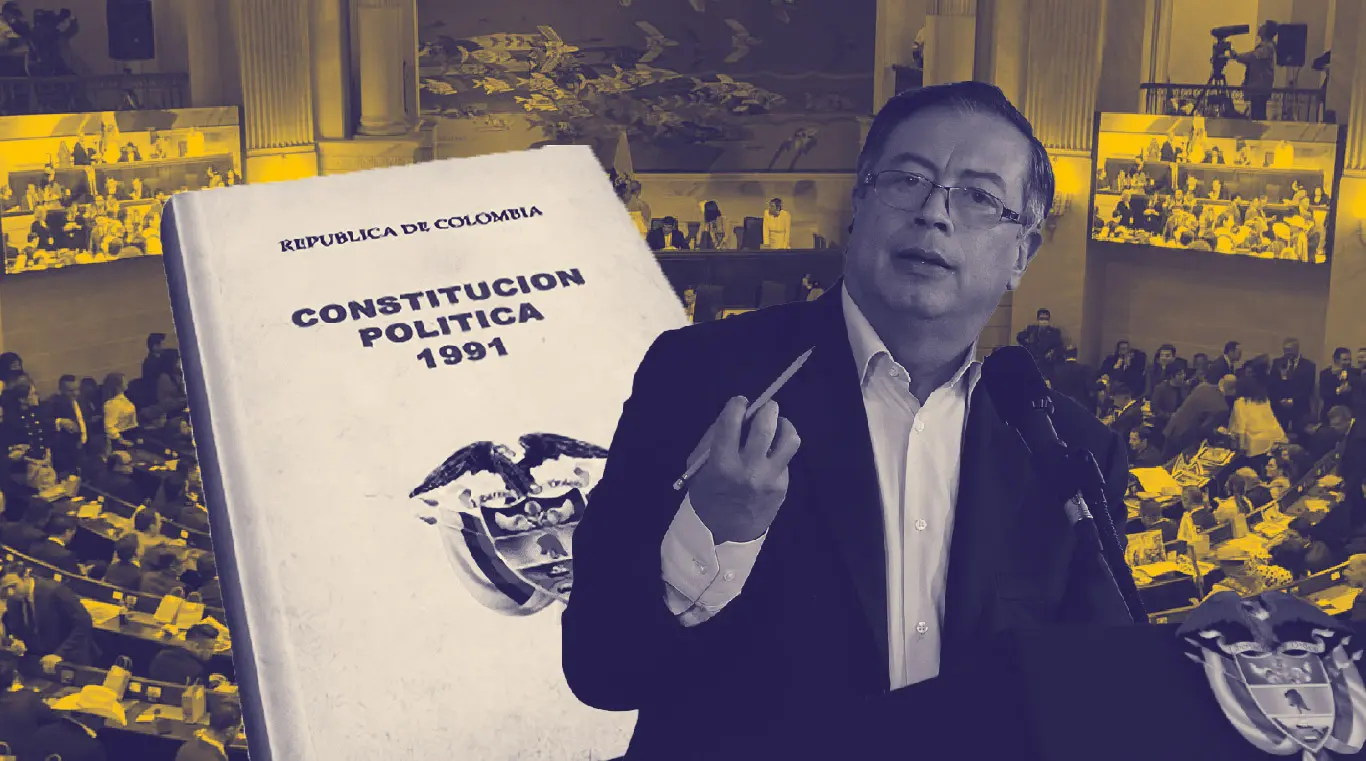
Despite efforts to erase his name from history, Camilo Torres Restrepo — who by coincidence shared his name with Camilo Torres Tenorio, a hero of Colombian independence executed in 1816 during the Reconquest — ultimately became an icon of the left, revered by figures such as President Gustavo Petro, who was also a guerrilla in his youth and keeps Torres’ cassock as a relic.
Discovery of His Remains
On Jan. 22, the ELN announced the discovery of his remains, information partially confirmed by the National Institute of Legal Medicine, which said it was conducting forensic analyses to establish whether one of the samples corresponds to Camilo Torres Restrepo.
The discovery of his remains, which had been kept for more than half a century in a vault in a military cemetery, has revived debate over his legacy.
“The body of priest Camilo Torres will be respected and laid to rest with honors as the founder of the Faculty of Sociology at the National University,” President Petro decided.
On Feb. 10, the vice president of the Colombian National University, Carolina Jimenez, said that the value and significance of Camilo Torres’ figure “are undeniable” for the university, where he also served as chaplain. The institution hopes his remains will rest in the Cristo Maestro Chapel.
teleSUR/ JF
Sources: EFE – UNAL